How Does an eSIM Work? A Simple Guide for Travelers
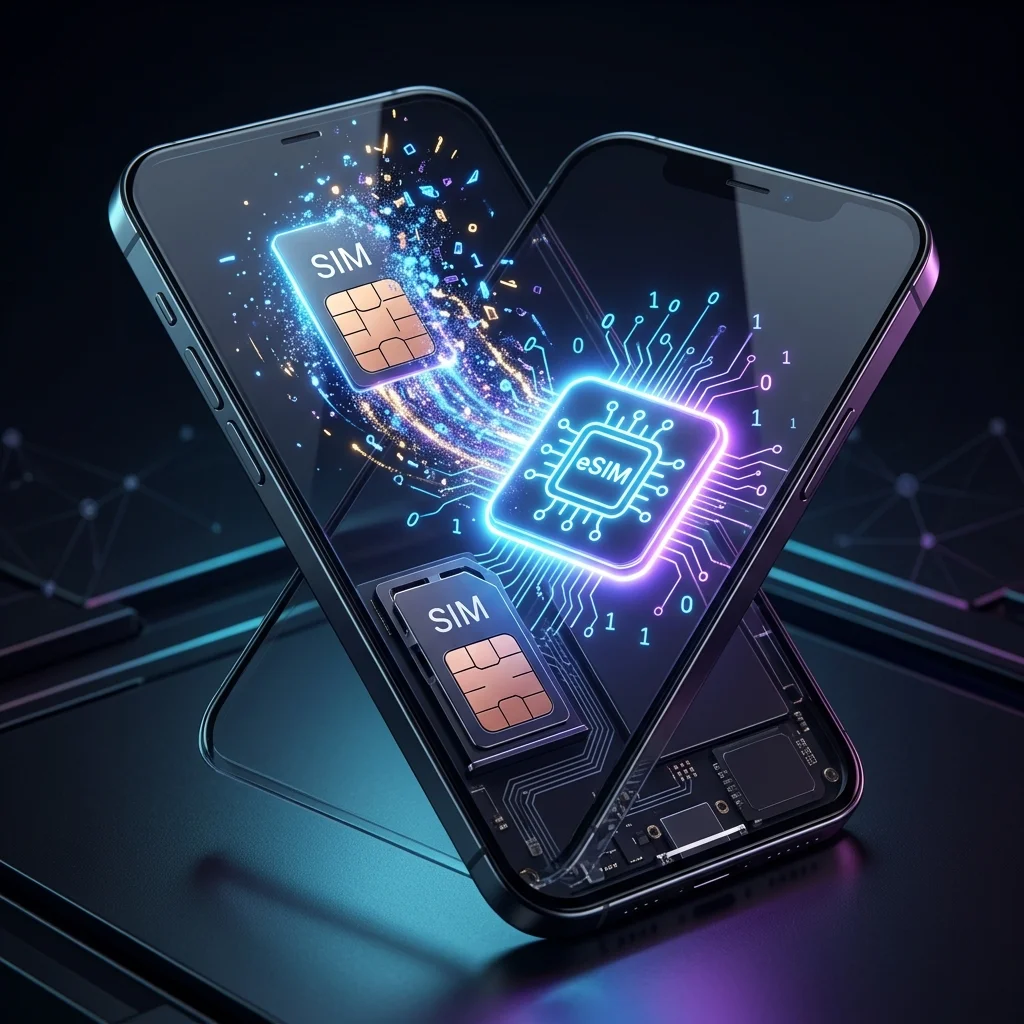
If you've booked a trip abroad, you've probably run into the word "eSIM" — and maybe wondered whether it's worth the switch from the plastic SIM card you've used your whole life. The short answer: an eSIM does everything a physical SIM does, minus the tiny plastic card and the airport kiosk queue. Here's how it actually works, in plain language.
What an eSIM actually is
An eSIM (embedded SIM) is a small chip built directly into your phone. Instead of sliding a physical card into a tray, you download a mobile plan onto that built-in chip as a digital profile. Your phone can store several eSIM profiles at once and switch between them in settings — useful when you want your home number and a travel data plan active at the same time.
Almost every recent phone supports eSIM: iPhone XS and newer, Google Pixel 3 and newer, and most flagship Samsung Galaxy models. If your phone was bought in the last few years, it very likely has eSIM built in.
How an eSIM works, step by step
The process is genuinely simple:
- You buy a data plan for your destination through an app like Travan — choosing the country, the number of days, and how much data you need.
- The plan is delivered instantly as a digital eSIM profile, usually as a QR code or an in-app one-tap install.
- You install it before you fly, while you still have home Wi-Fi. Nothing activates yet.
- You land, switch the eSIM on, and your phone connects to a local partner network automatically — no physical swap, no hunting for a shop.
Because the profile is already on your phone, you're online within moments of landing, while everyone else is queuing at the airport SIM counter or paying their home carrier's roaming rates.
Why travelers are switching to eSIM
The appeal comes down to three things: no roaming bills (you pay local-style data prices instead of your home carrier's international surcharges), no lost SIM cards (your original SIM stays safely in your phone), and instant setup (buy and install in minutes from anywhere).
There's one more advantage that most eSIM providers don't offer, and it matters more than people expect.
Staying reachable: the calling problem eSIMs usually ignore
Most travel eSIMs give you data only. That's fine for maps and messaging apps — but the moment you need to make an actual phone call, or the family back home tries to reach you, you hit a wall. Calls from a data-only eSIM either don't work or show up as an unknown number, and unknown numbers get ignored.
Travan is built differently. It includes international calling that displays your own real, verified number as caller ID. So when you call home, your family sees it's you — not a random internet number they'll let ring out. You stay reachable on the number they already know, the entire trip. It's the difference between having data and actually staying connected.
Getting started
If your phone supports eSIM, you're ready. Pick your destination, choose a plan that fits your trip, install before you fly, and connect the moment you land.
Browse eSIM plans for your destination →
Related reading: eSIM vs Traditional SIM: What Every Traveler Needs to Know · How to Save Money on International Roaming
Ready to Stay Connected on Your Next Trip?
Get instant eSIM data and international calling in 200+ countries with Travan — no roaming fees, no SIM swaps, no surprises.
Browse Travan Plans