eSIM vs Traditional SIM: What Every Traveler Needs to Know
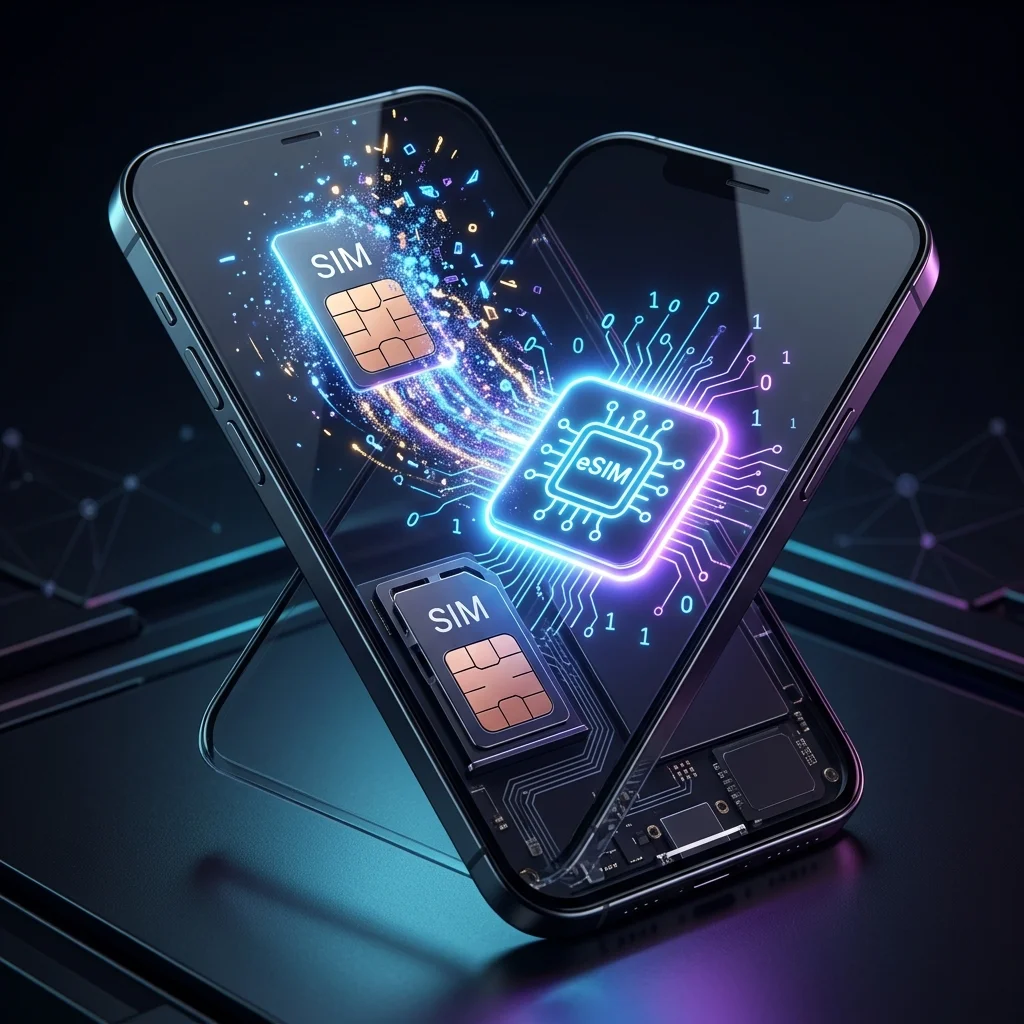
For decades, connecting your phone meant one thing: a small plastic SIM card. Now there's a second option built right into your phone — the eSIM. If you're deciding which to rely on for your next trip, here's a clear, side-by-side look at how they differ and which suits which traveler.
The basic difference
A traditional SIM is a physical chip you slide into your phone; it stores your subscriber details and connects you to a network. An eSIM does exactly the same job, but it's a chip already built into your phone onto which you download a plan digitally — no card to insert, no store to visit.
Setup and activation
A physical SIM needs the card in hand, an ejector tool, and sometimes a shop visit to activate — awkward when you've just landed in a new country. An eSIM installs in minutes from an app: you download the plan, often before you even leave home, and switch it on when you arrive. For a deeper walkthrough, see How Does an eSIM Work?
Travel convenience
This is where the gap is widest. With physical SIMs you're buying a new card in each country, keeping track of the tiny thing, and swapping it in and out. With an eSIM you can hold several plans on one phone and switch between them in settings — your home number and a travel data plan active at the same time.
Cost
Physical travel SIMs can mean repeat purchases and, if you skip them, painful roaming fees. eSIM plans tend to price competitively, with no shipping and easy plan-to-plan comparison in-app. (More on avoiding roaming charges specifically in our roaming savings guide.)
Security
A physical SIM can be lost, stolen, or damaged. An eSIM can't be physically removed, and its profile can be managed or deleted remotely if your phone goes missing.
Which should you choose?
Stick with a physical SIM if your phone doesn't support eSIM, or you regularly move one SIM between devices.
Choose an eSIM if you travel often, want multiple lines on one phone, and value installing before you fly and connecting the moment you land.
One thing to check before you buy
Most travel eSIMs are data-only — fine for maps and messaging, but they leave you unable to make normal calls, and when you do call, your number shows as unknown. Travan is the exception: it pairs eSIM data with international calling that displays your own real number as caller ID, so family and contacts always know it's you. It's the connectivity a physical SIM never offered either.
Ready to Stay Connected on Your Next Trip?
Get instant eSIM data and international calling in 200+ countries with Travan — no roaming fees, no SIM swaps, no surprises.
Browse Travan Plans